

We're tackling the climate and biodiversity crises simultaneously.
While accelerating towards net zero by developing and operating renewable energy assets, we're aware of the responsibility on us, as a responsible and sustainable developer, to build and maintain our sites in harmony with nature.
At the core of our approach to protecting the natural environment is ensuring that we continue to meet our legal and regulatory requirements, protecting the environment through all phases, from development through to asset management (operations) and decommissioning.
Details of our environmental management performance for FY 2023/24 can be found in our Sustainability Report by clicking below.
Biodiversity Net Gain
In 2022, we published our 10-point plan for Biodiversity Net Gain (BNG) within our ‘Positive for the Planet’ report which is shown below.

Our BNG Toolkits
Alongside this report and plan, we published two BNG Toolkits so that others can review our approach, implement it on their own projects and so that we can evolve a consistent methodology for quantifying BNG together across the sector.
Every development site has an intrinsic 'biodiversity value', which is determined by a wide range of factors including the type, condition and area of a habitat.
By quantifying the biodiversity value of a site before and after development, we can assess the impact that activities have had on the biodiversity value, whether positive or negative, and understand the most effective ways of mitigating biodiversity losses and enhancing biodiversity gains.
Avoiding impacts on biodiversity where possible and meeting all legal requirements on species, habitats and designated sites. | ||
|---|---|---|
| + | + | + |
| Post-development units are 95-104% of the pre-development units | Post-development units are 105-109% of the pre-development units | Post-development units are >110% of the pre-development units |
| = | = | = |
| No Net Loss | Biodiversity Net Gain | Significant Biodiversity Net Gain |
A site is deemed to have achieved BNG if the number of Biodiversity Units post-development is greater than 105% of the baseline biodiversity value, and a Significant BNG if it has achieved 110% or above.
We remain committed to the SSE Group-wide targets on biodiversity No Net Loss (NNL) from 2023 and Biodiversity Net Gain (BNG) from 2025 on newly consented onshore projects.
Strategic value from our leadership in renewables on BNG is also continuing, from policy influence on the development of a Scottish BNG metric utilising our sector-leading BNG toolkits, to supporting consenting in jurisdictions where BNG has already become mandatory.
Our toolkits and helpful User Guide are available to download below.
The Optioneering Toolkit is intended to facilitate site comparison and the Project Toolkit is intended to help facilitate baseline and BNG assessments.
Note: We are pleased to provide our toolkits for your use and welcome your feedback and queries on their use. We are also keen to understand how you are using them and in which industries. Please email us at SSERSustainabilityTeam@sse.com.
Our Innovative Approach
Innovation will be key to drive nature restoration across our assets and decision-making for our future pipeline.
Recognising this, we have collaborated with research organisations, academia and nature conservation agencies on a range of research projects across our technologies.
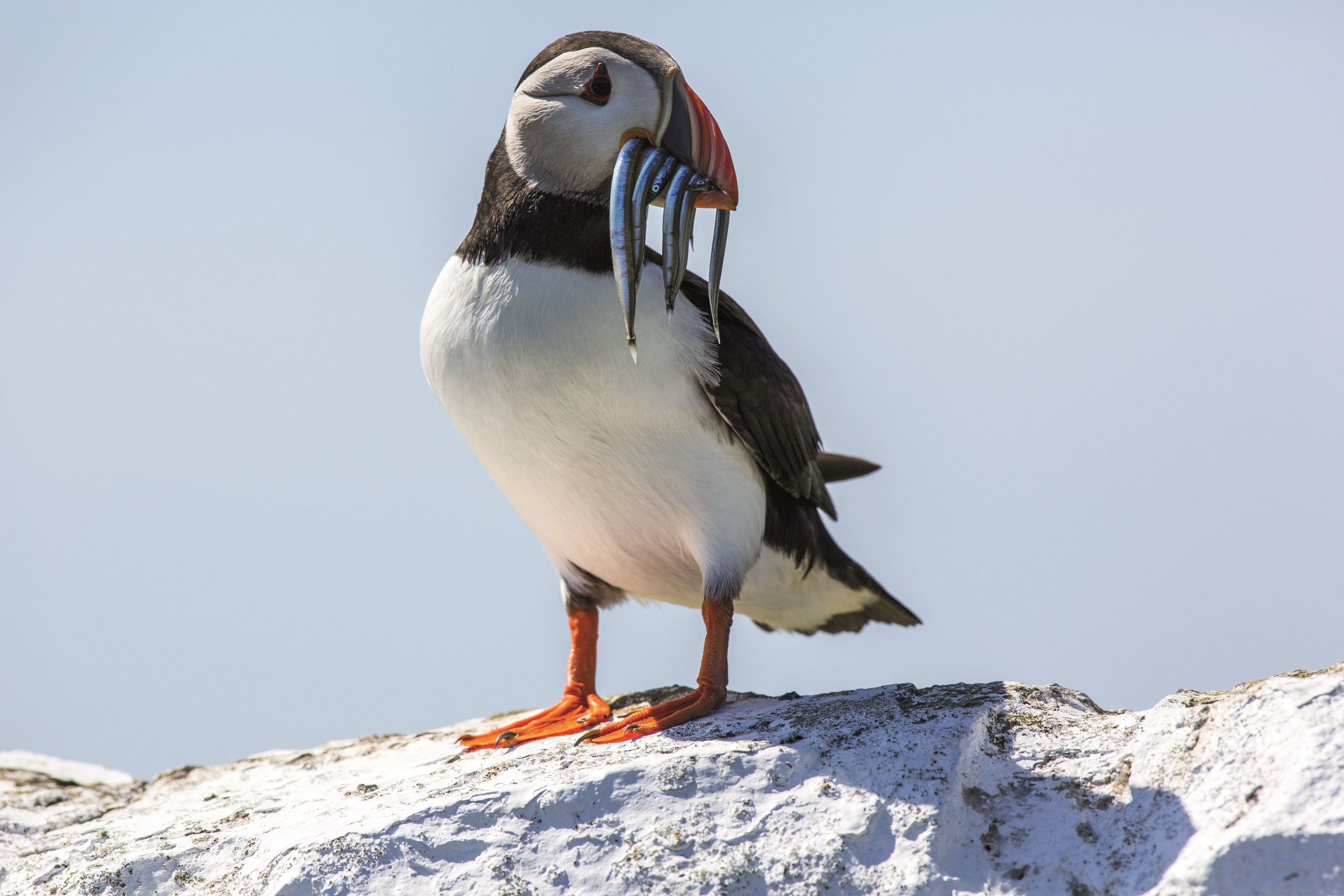
This has ranged from puffin monitoring at our offshore assets to peatland restoration at our onshore wind sites, and we are using the findings to directly inform our asset management strategy.
These case studies can be found from page 43 in our Sustainability Report.
Protect, restore and enhance the natural world
SSE Renewables is dedicated to addressing both the climate and biodiversity crises simultaneously. The goal is to accelerate the transition to net zero by developing and operating renewable energy assets while recognising and addressing the responsibility to build and maintain sites in harmony with nature and achieving Biodiversity Net Gain on new consented onshore projects from 2025. Over 2024/25, SSE Renewables had 4 ‘serious’ environmental incidents, a decrease from 10 incidents, achieving its target to have no more than nine serious incidents in that year. It had 24 minor incidents, a decrease from 41 minor incidents in 2023/24, more in line with the 19 minor incidents it had in 2022/23. SSE Renewables had 0 major incidents in 2024/25. The reduction in serious incidents can be attributed to an enhanced level of assurance in focus areas such as oil loss, SF6 and silt. Furthermore, SSE Renewables undertook concerned contractor engagement. This included delivery of training materials regarding management of oils and SF6 management, as well as early contractor integration with three pre-construction meetings.
Our goals

Deliver biodiversity
Goal 1 +Deliver biodiversity
Goal 1No Net Loss on newly consented onshore major projects from 2023 and Biodiversity Net Gain from 2025
2024/25 progress:
Three new projects consented in 2025 as of April 1 | All three will deliver Biodiversity Net Gain

Ensure No Net Loss of native woodlands
Goal 2 +Ensure No Net Loss of native woodlands
Goal 2Ensure No Net Loss of native woodlands from 2024
Target: No net loss
Native woodland felled: 1.51 hectares
Native woodland planted: 878.8 hectares

Develop an evidence and research-based approach for biodiversity enhancement in marine environments
Goal 3 +Develop an evidence and research-based approach for biodiversity enhancement in marine environments
Goal 3We continued to commit to marine environmental research to ensure informed decision making across our offshore wind portfolio. In 2024/25, we continued are strategic research collaborations and monitoring programmes to ensure its developments deliver measurable ecological outcomes that support long-term marine ecosystem resilience.
We are actively engaged in a suite of marine research projects. The PrePARED (Predators and Prey Around Renewables Energy Developments) project, led by Marine Directorate and their academic partners, investigates the ecological role of offshore energy structures. It aims to provide a scientific evidence base to help accelerate offshore wind deployment while safeguarding marine mammal and seabird populations. Complementing this, the PELAgIO (Physics-to-Ecosystem Level Assessment of Impacts of Offshore Windfarms) study explores how offshore wind farms influence physical and biological processes, from plankton productivity to predator-prey dynamics, across multiple spatial scales using autonomous multi-sampling technologies.
The ECOWINGS (Ecosystem Change, Offshore Wind, Net Gain and Seabirds) project has a main aim to investigate the effects of offshore wind farms on predator-prey interactions and competition among four key seabird species, including the potential for habituation over time. Meanwhile, ECOCHANGE (Ecosystem COnsequences of Changes to HAbitats and implications for a Net Gain Energy approach) will examine how offshore wind farms function as artificial reefs, reshaping local biodiversity and ecosystem functions, and informing marine net gain strategies.
We are also leveraging cutting-edge technology to monitor wildlife. In collaboration with Avanade, we continue to operate an AI-powered system to monitor a puffin colony near the Beatrice Offshore Windfarm. This system uses camera footage and machine learning to detect puffins with high accuracy.
SSE Renewables’ long-standing involvement in Regional Advisory Groups (RAGs) for the Moray Firth and Forth & Tay regions ensures that monitoring plans are co-developed with government bodies, conservation agencies, and NGOs, facilitating shared learning and best practice across the sector. In the Moray Firth, SSE Renewables’ Marine Mammal Monitoring Programme (MMMP), delivered in collaboration with Aberdeen University, builds on long-term studies of bottlenose dolphins, harbour seals, and porpoises. In the Forth and Tay region, it contributes to multiple studies with partners including the Royal Society for the Protection of Birds (RSPB) and the UK Centre for Ecology and Hydrology (UKCEH) to track and monitor seabirds in the region.
We are co-funding the Seabird Interactions Study at Neart Na Gaoithe, deploying innovative collision monitoring and bird tracking systems on turbines which is widely recognised as a leading example in UK offshore wind. Beyond regional initiatives, SSER actively participates in national industry forums such as the Offshore Wind Industry Council and the Offshore Wind Strategic Monitoring Research Forum, contributing to sector-wide ecological research. Together, these collaborations reflect our commitment to science-led development and ensure that offshore wind growth is aligned with long-term ecological integrity.
Progress against our Biodiversity 10 Point Action Plan

Deliver Biodiversity No Net Loss on major onshore projects consented from 2023
In 2024/25, SSE Renewables gained consent on one new project which has been designed to achieve a minimum of NNL: Richfield Solar (18MW).
SSE Renewables is already delivering on its targets for its previously consented sites since 2021. We have committed to achieving No Net Loss on the following sites consented pre-2023: Bhlaraidh Ext (84 MW), Littleton (30MW), Salisbury (50MW / 100MWh), Monk Fryston (320MW), and Strathy South (208MW).
All projects have been assessed using SSE Renewables’ publicly available BNG toolkit and will also meet our ambition of delivering biodiversity.

Deliver Biodiversity Net Gain on major onshore projects consented from 2025 (including repowering and decommissioning projects)
- Over 2024/25, three projects have been consented and designed to deliver BNG: Mullafarry (80MW), Inchamore (15MW), Achany Extension (80 MW) and Gortyrahilly (42MW). In addition, Cloiche (125 MW) originally designed to achieve NNL in 2023, will now deliver BNG due to a revised Habitat Management Plan in 2024.
- Since 2021, SSE Renewables has delivered NNL on 11 sites (named above and in commitment 1), with 10 out of those 11 sites achieving a minimum of 10% BNG. The exceptions are Bhlaraidh Extension where challenges remain but the commitment to achieve BNG persists.
- The cross-SSE Renewables BNG Working Group - established to ensure internal readiness for meeting BNG targets - started providing cross-technology support over 2024/2025. The support provided enables SSE Renewables to deliver its BNG commitments resolve practical challenges of BNG implementation.

Embed BNG ambitions in decision-making at each stage of all new project developments from 2023
Over 2024/25, we developed a process to integrate climate resilience and BNG throughout the project lifecycle to ensure effective delivery of mandatory BNG in England. The process allows project teams to address climate risks to BNG habitats over the 30-year maintenance period and maximise opportunities for BNG to provide wider resilience benefits. Standardising this process of integrating climate resilience with BNG enables consistency in the quality of BNG design and implementation, efficiencies in the implementation of this process, and continuous learning and improvement, as experience builds in climate resilience and BNG.
SSE Renewables launched a pilot project promoting upskilling in peatland restoration at its Viking wind farm. Delivered in collaboration with NatureScot, Peatland Action, Shetland Peatland Restoration Services, and contractors RJ McLeod, the three-day training session for local Shetland-based contractors included theoretical and practical demonstrations on peatland management. The work serves as a blueprint for future training initiatives to support habitat management and BNG.

Use our BNG Toolkit and collaborate with partners to identify biodiversity improvements on operational sites
Over 2024/25, SSE Renewables delivered training on its BNG toolkit to project consultants in collaboration with the consultancy WSP. SSE Renewables also delivered foundational training in Biodiversity and Environmental Management for those seeking entry to the renewables industry as part of a Green Tech Skillnet course in Ireland.
SSE Renewables’ BNG Toolkit successfully quantified nature positive opportunities in hydro operational assets over 2024/25. This includes calculating the uplift from a ‘no lawnmowing’ (‘no mow’) policy in and around hydro power stations. The ‘no mow’ policy resulted in a 503% increase in Biodiversity Units, across an area of approximately 10 hectares, significantly improving the condition of grassland habitats for pollinating species, alongside reductions in carbon emissions and reduced operational costs.

Evolve our BNG Toolkit and approach to enable use in all geographies
In 2024/25, SSE Renewables developed an approach aimed at streamlining planning requirements on projects by integrating biodiversity and land carbon into a combined toolkit. The land (or biogenic) carbon plug in, is SSE Renewables’ first step towards a holistic natural capital approach. It allows users to assess losses and gains in carbon storage and sequestration from development projects and habitat management works. It safeguards and prioritises carbon sink habitats to avoid impacts to ultimately enhance. By assessing biodiversity and land carbon, balanced decisions for short and longer-term improvements in biodiversity and natural carbon stores can be made.
Over 2024/25, SSE Renewables developed a Geographic Information System (GIS) application to streamline data analysis for BNG assessments. The application allows integration of mapping visualisations and supporting data, enabling users to accurately compare pre and post-development habitat areas for sites. The data outputs are used in SSE Renewables’ BNG toolkit to identify the best options for biodiversity enhancement.

Actively participate in industry forums to support the development of BNG across all renewable technologies
Since 2021, SSE Renewables has been an industry partner in the Nature+Energy project in Ireland, a collaboration between industry and academia to optimise land-use and ecosystem services on wind farms. Funded by Science Foundation Ireland (SFI) through MaREI, along with Wind Energy Ireland and 9 industry partners, the project – concluding this year (2025) – will deliver a sectoral biodiversity plan template and habitat management guidance to ensure biodiversity is accounted for as reliance on wind energy increases to combat climate change.
In 2024/25, as part of its active engagement in Wind Energy Ireland, SSE Renewables contributed to the trade body’s industry position paper on BNG, outlining the opportunities and challenges involved with incorporating BNG into wind energy developments in Ireland. The paper seeks to consolidate the industry’s position ahead of future consultations.

Contribute to research projects and the creation of knowledge around BNG in the renewables sector
SSE Renewables worked closely with the University of Galway over 2024/25, collecting Greenhouse Gas data at its Galway Wind Farm which will help to understand how peatland restoration can contribute to climate change mitigation. Quantifying carbon sequestration for various conditions will assist in characterising Atlantic Blanket Bog. This data collection is key to ensuring carbon credits can be verified and certified in future. The Galway Wind Park habitat management plan forms part of the EU LIFE Multi Peat project alongside projects in Belgium, Germany, the Netherlands and Poland.
SSE Renewables are positively engaged in the Expert Working Groups established as part of the collaborative design of the Onshore Sector Deal, in which industry, regulators, government and other key stakeholders come together to inform best practice. The purpose is to inform best practice guidance by providing expert advice and intelligence on matters relating to the impact of onshore wind developments, development of BNG approaches, technological and scientific advances (either for nature directly or new construction techniques). This is to ensure onshore wind development is consistent with the Scottish National Planning Framework, Scottish Government’s climate targets and the Scottish Biodiversity Strategy.

Trial new approaches for BNG on offshore projects, including digital innovations
- Over 2024/25, SSE Renewables actively engaged with the current BNG intertidal metric proposed by the UK Department for Environment, Food and Rural Affairs (DEFRA), contributed to industry discussions and assessed the proposed metric’s application to offshore wind landfall sites. This includes exploring how measures such as Horizontal Directional Drilling can be appropriately accounted for within the metric, particularly in relation to avoidance and minimisation principles.
- SSE Renewables also continued to work closely with industry peers and regulatory bodies to shape emerging Marine Net Gain (MNG) policies. The focus has been on advocating for a strategic, goal-driven approach to nature restoration that moves beyond site-specific delivery and supports coordinated, ecologically meaningful outcomes aligned with national marine biodiversity targets.
Develop the concept of ‘Habitat Banks’ with a transparent methodology for applying BNG credits
SSE Renewables continues to monitor and contribute towards policy developments in this area with a view to identifying potential opportunities for it to utilise these banked biodiversity units in the future.
Lead the BNG working group of the Powering Net Zero Pact, a collaboration of global power sector companies
SSE Renewables continues to chair the Pact’s Biodiversity Working Group, consisting of 18 participants and 12 companies. The group is gathering case studies and best practice examples which are being collated on the PNZP extranet site. SSE’s 2024 report on its Powering Net Zero Pact and the Biodiversity Group is available here: net-zero-pact-2024-v3.pdf